
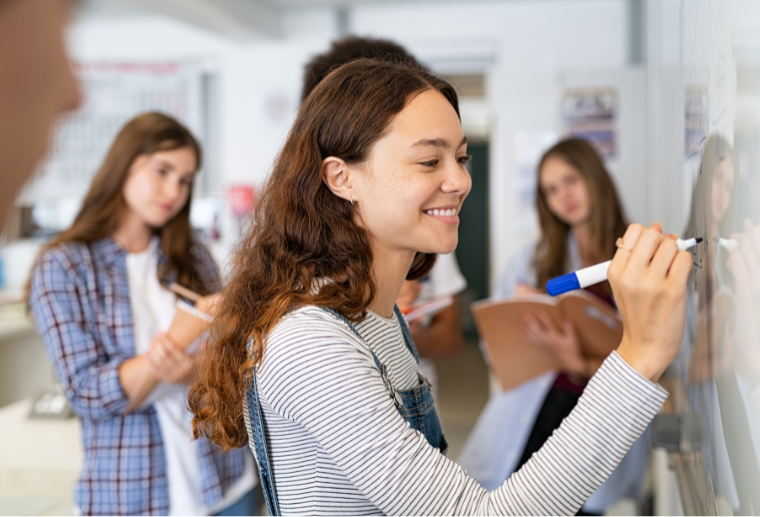
 Building Thinking Classrooms provides an innovative instructional framework at Goochland High School that transforms mathematics education through nine research-based practices designed to enhance student thinking and engagement. This flexible approach allows educators to adapt methods to their specific classroom dynamics and student needs while maintaining proven effectiveness.
The framework fosters collaborative learning communities where students work together in small groups and as a whole class to analyze information, make meaningful connections, solve complex problems, and draw thoughtful conclusions. Rather than following rigid protocols, teachers implement practices in ways that work best for their students, creating dynamic learning environments that prioritize critical thinking and mathematical reasoning.
Through this student-centered approach, mathematics becomes an interactive, collaborative experience that develops both computational skills and deeper mathematical understanding.
 Virtual Reality technology continues expanding educational possibilities at Goochland High School through FloreoVR, a research-based program now funded for two years that allows students to practice real-world skills in immersive, controlled environments.
Through guided simulations, students engage in scenarios such as crossing busy city streets, working in retail settings, and navigating social interactions. A teacher provides real-time coaching and personalized instruction while students explore these virtual environments, ensuring progress is closely monitored and instruction meets individual learning needs.
The program’s strength lies in its ability to simulate complex real-world situations in a safe, repeatable format. During a pilot program in 2025, students demonstrated remarkable engagement and willingness to take risks in the virtual environment, then successfully applied these practiced skills to real-world situations outside the classroom.
FloreoVR leverages technology already available at Goochland High School—VR headsets and iPads—making it both cost-effective and immediately accessible. This innovative approach provides all students, including those in special education programs, with opportunities to build confidence and competence in essential life skills through experiential learning that bridges the gap between classroom instruction and real-world application.
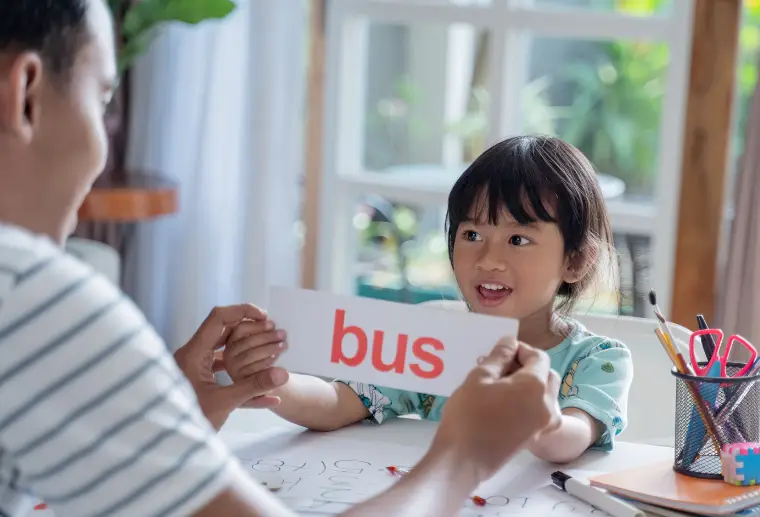 Goochland’s comprehensive literacy initiatives support reading development from preschool through elementary years. The Preschool Preparedness Program provides every preschooler with backpacks containing books and learning materials at year’s end, establishing a strong educational foundation and building confidence for kindergarten entry.
Students in kindergarten through second grade master reading fundamentals through phonetic coding resources including specialized books, visual posters, interactive flashcards, and engaging songs. This systematic approach to phonics instruction helps students decode words and develop comprehension skills early, ensuring that by third grade, they transition from learning to read to reading to learn.
The Junior Reading Olympians program represents a collaborative partnership between third-grade teachers and school librarians. Students and teachers read eight carefully selected non-fiction books that enhance science and history classroom content. All classes engage with the same texts simultaneously, completing interactive activities and challenges based on their reading. Students apply their knowledge through competitive, game-style review sessions that prepare them for SOL testing while fostering a love of reading and learning.
 In elementary education, a Makerspace serves as a dedicated collaborative workspace equipped with tools and materials that inspire students to design, experiment, build, and invent through hands-on exploration. These dynamic learning environments encourage creativity and problem-solving while seamlessly integrating science, technology, engineering, art, and mathematics (STEAM) concepts.
Elementary Makerspaces foster hands-on learning through active engagement and experimentation, allowing students to discover concepts by building, creating, and interacting with their environment. Students explore their ideas and express creativity through various mediums while developing critical thinking skills as they navigate project challenges. The collaborative nature of Makerspace activities strengthens communication and teamwork abilities, preparing students for real-world problem-solving situations.
Through this innovative approach to learning, students gain confidence in their ability to tackle complex challenges while developing essential 21st-century skills in a supportive, creative environment.
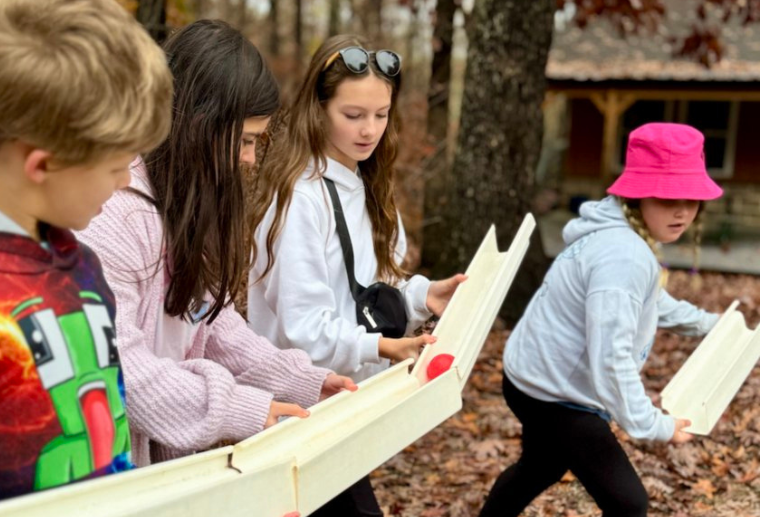 The STEM in Nature program provides students with immersive outdoor learning experiences at Westview on the James through three seasonal visits each year. Students study aquatic and forest ecosystems while cultivating gardens, observing how environmental changes affect the same location across different seasons. Middle and high school students enhance their understanding through exploration of watershed systems and environmental sciences both on water and land in partnership with the James River Association.
Through these hands-on investigations, students discover how living organisms meet basic life needs, possess functional adaptations, and can be classified by specific characteristics. They observe and measure environmental changes over time while investigating how plants influence air and water quality. Conservation activities include planting grasses along riverbanks to prevent erosion and water pollution, as well as establishing trees to improve air quality.
Students explore how organisms, including humans, interact within ecosystems and adapt to satisfy life needs while responding to environmental challenges. They examine how location, climate, and physical surroundings shape community life, including food systems, clothing, shelter, transportation, and recreation. The program incorporates rich historical context by studying how the James River served as a vital source of nourishment and transportation for both Powhatan Indians and English settlers.
These outdoor experiences seamlessly integrate with classroom academic lessons, creating meaningful connections between environmental science concepts and real-world applications.
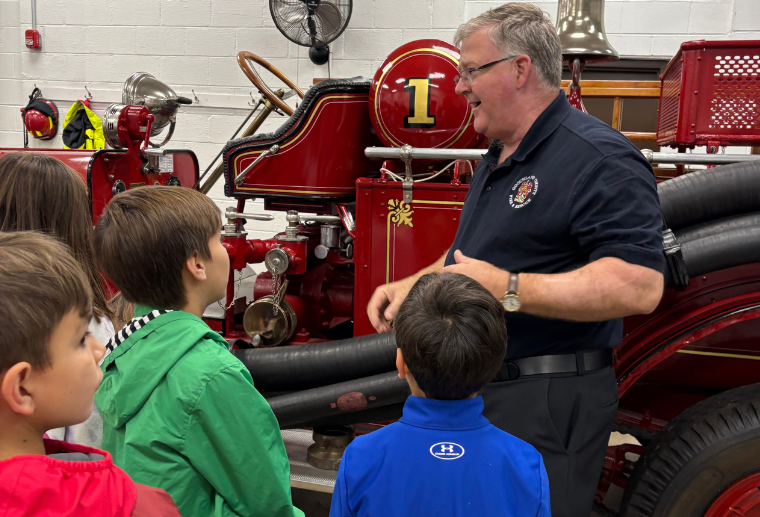 The Time Travel in Goochland enrichment program launched in 2023 through a Strategic Innovation Grant, serving fourth graders at all three elementary schools.
Through immersive time travel experiences across Goochland County’s five districts, students develop a deeper understanding of Virginia’s interconnected history during pivotal periods including the Revolutionary War, Civil War, and Civil Rights Movement.
Students document their historical journeys through diverse creative projects, including photojournalism, digital storytelling, student podcasts, and biographical portraits of Goochland citizens throughout history. These authentic learning experiences help students connect with their local heritage while developing critical thinking and multimedia skills.
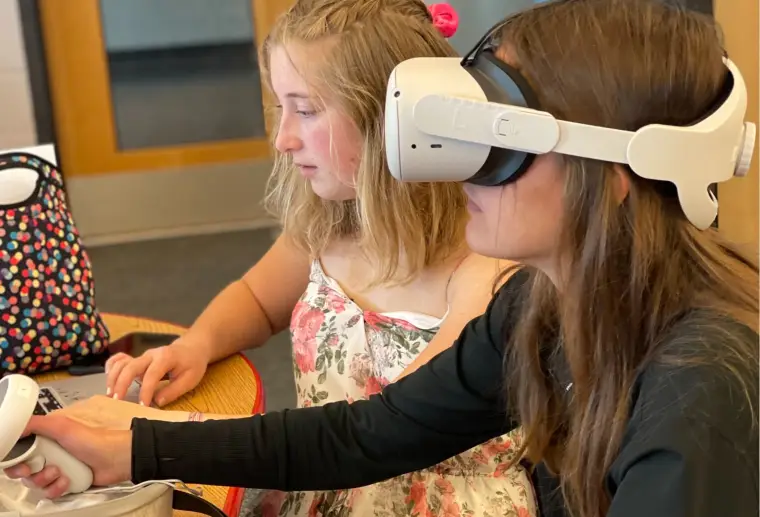 As K-12 education prepares students for an evolving global workforce driven by technological innovation, integrating these same advances into classroom learning becomes essential. Recognizing that students possess diverse learning styles and varying levels of technology access, the GEF partnered with high school teachers to introduce Virtual Reality into the curriculum.
Virtual Reality technology enhances student engagement by creating immersive learning experiences that improve memory recall and retention. Through VR environments, students develop critical soft skills including communication, reasoning, problem-solving, and creative thinking while practicing decision-making in realistic scenarios.
This innovative approach accommodates different learning styles and challenges while ensuring all students can access cutting-edge educational technology, preparing them for success in an increasingly digital world.