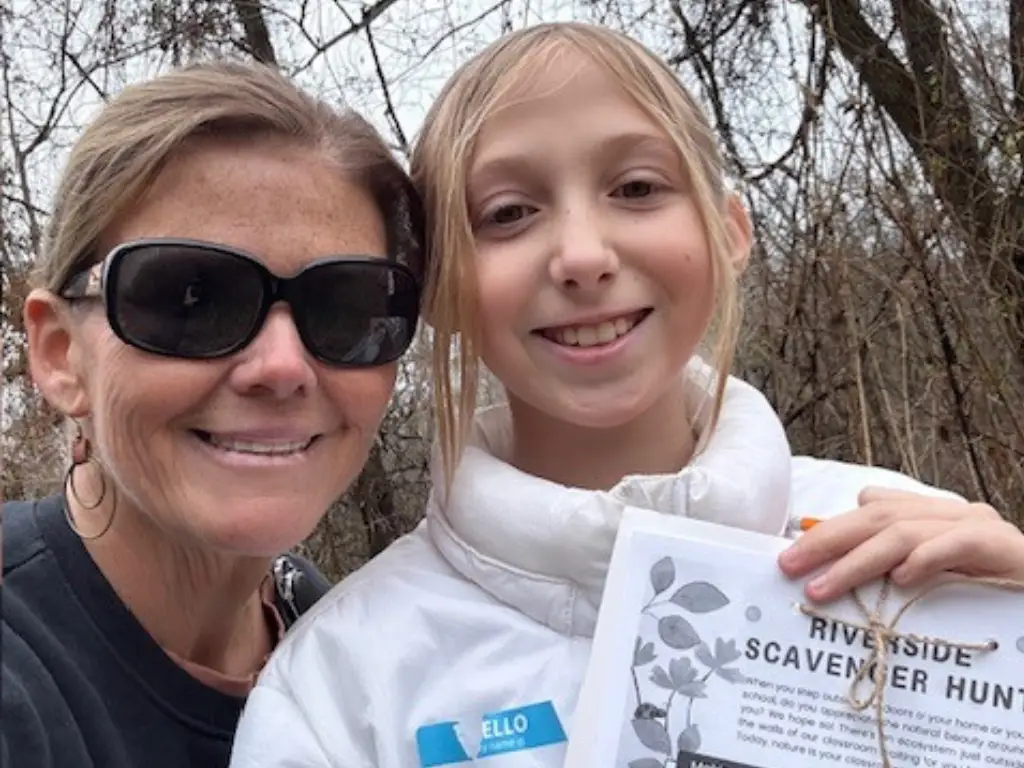
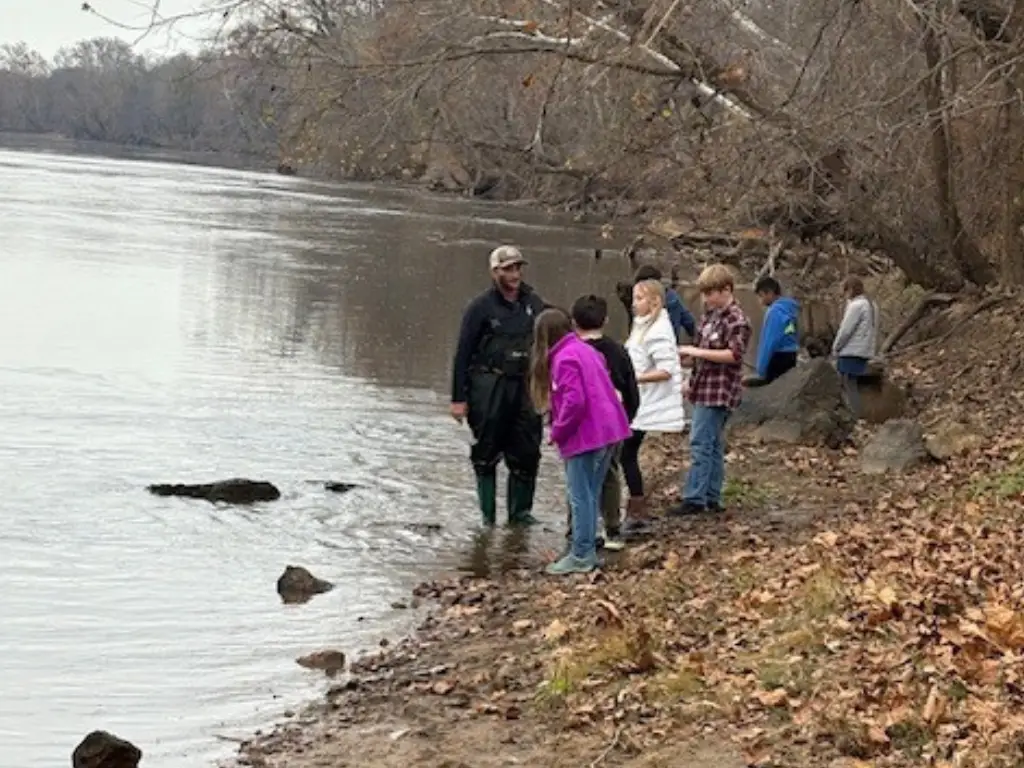
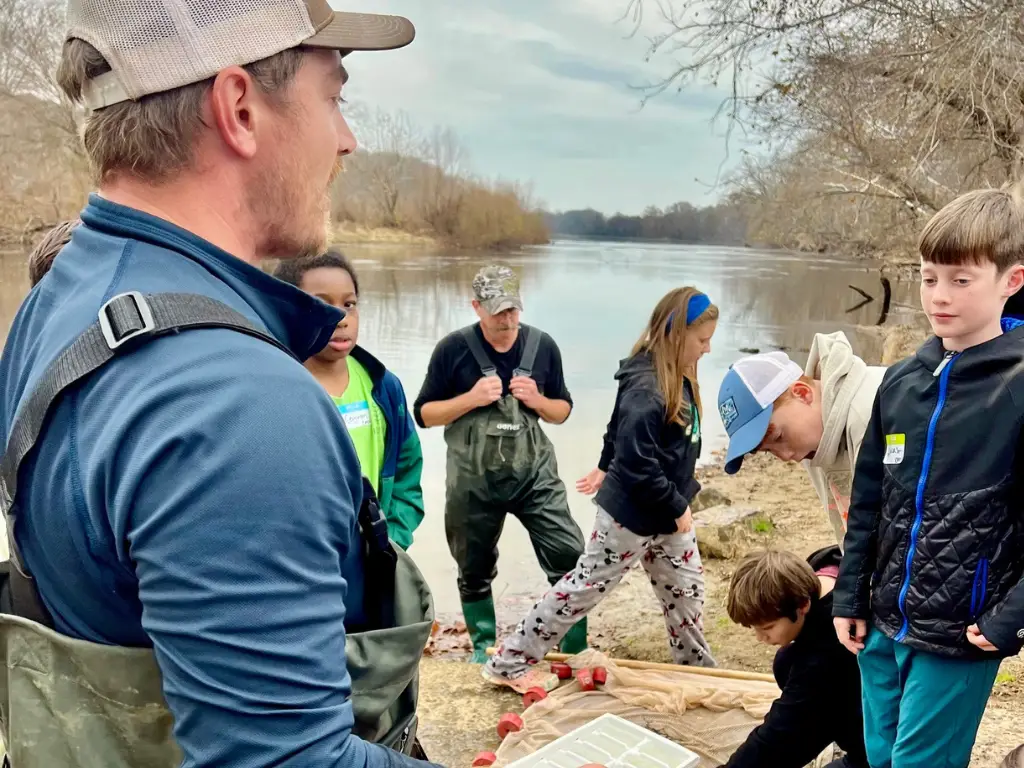
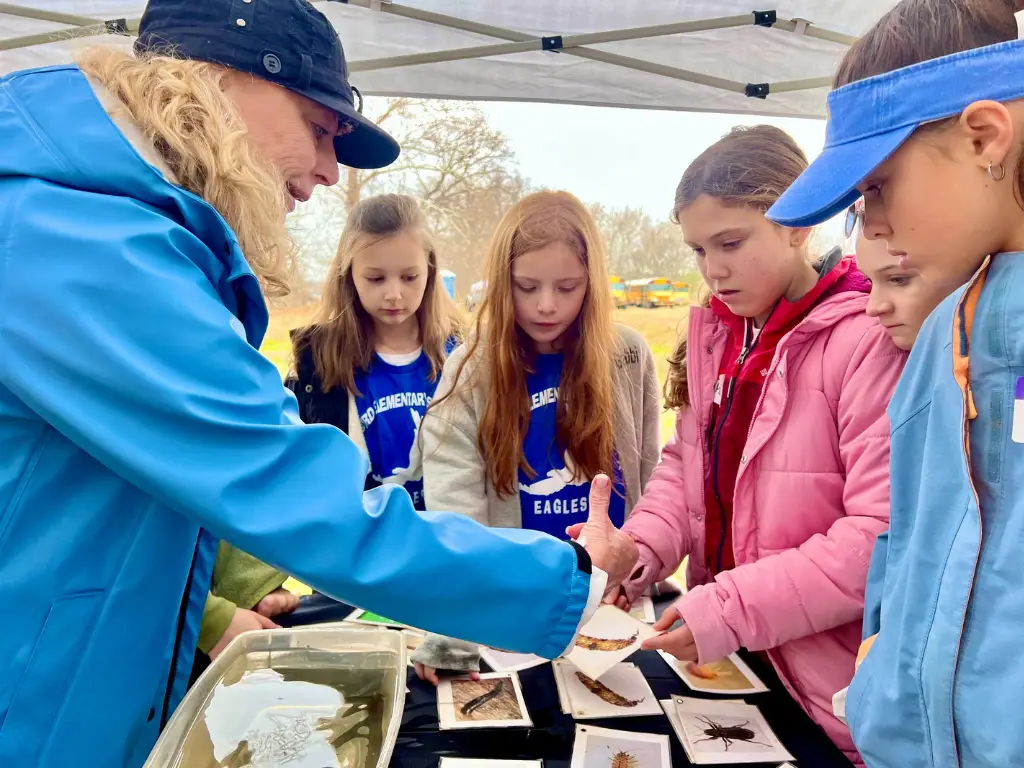
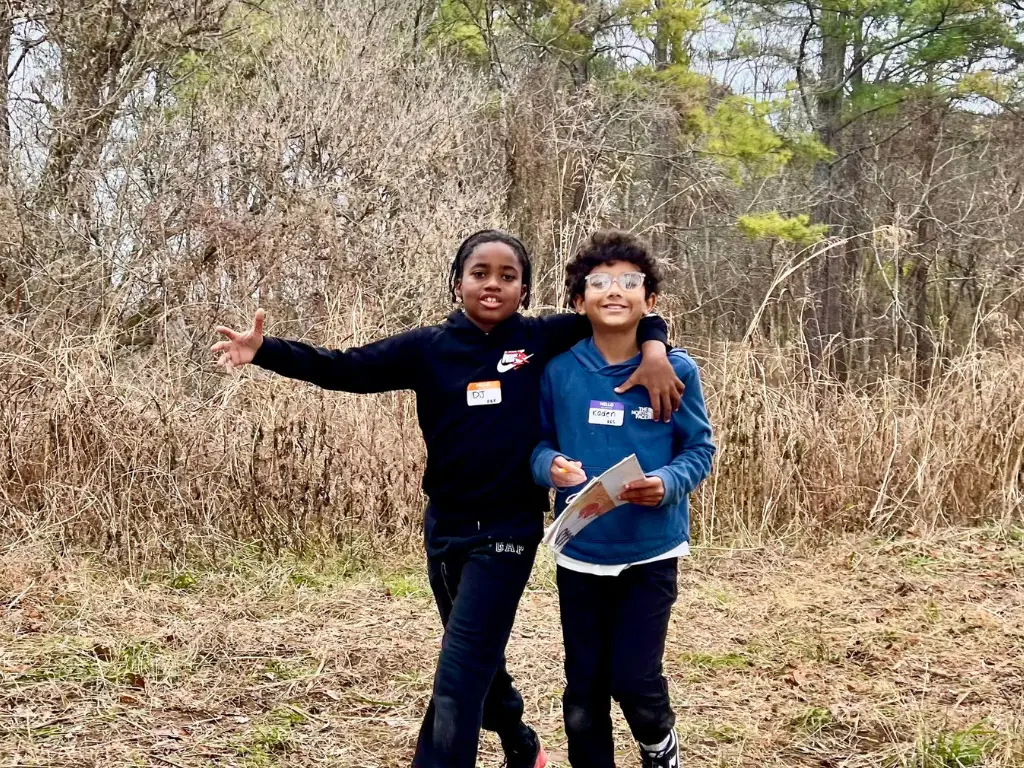
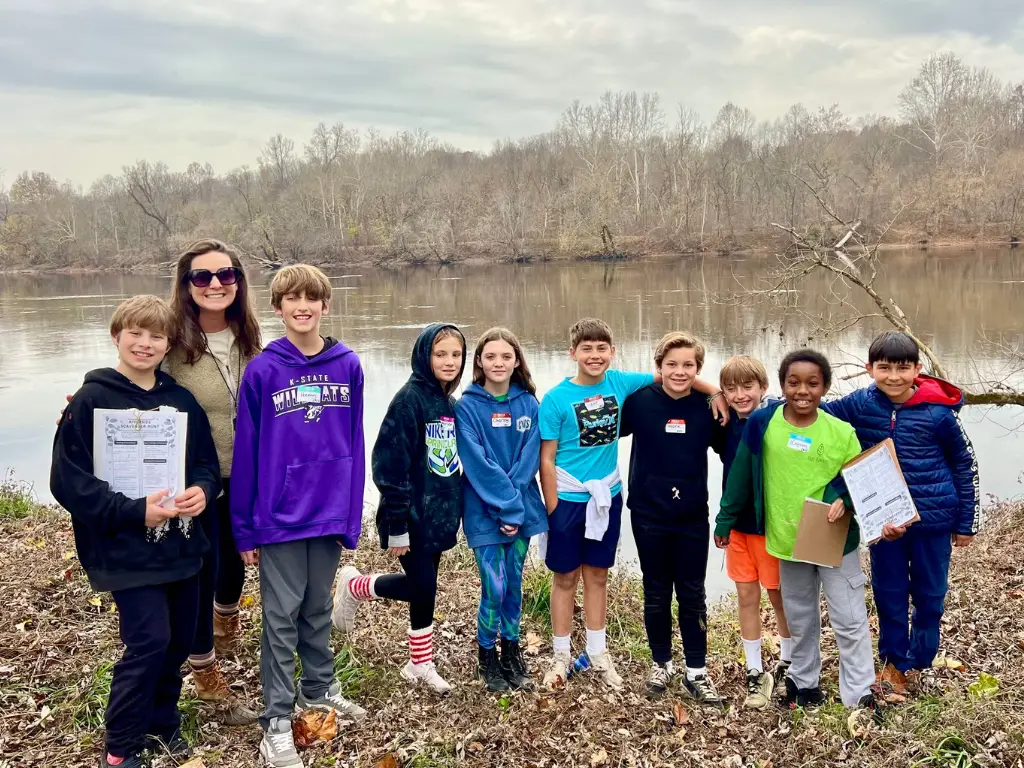
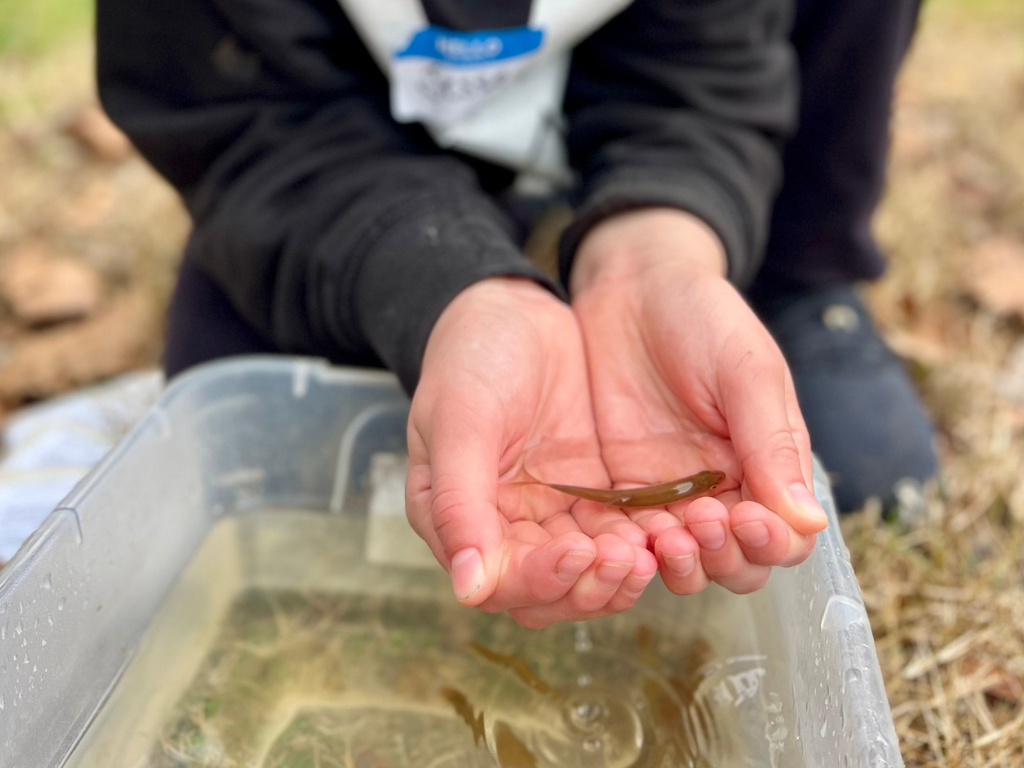
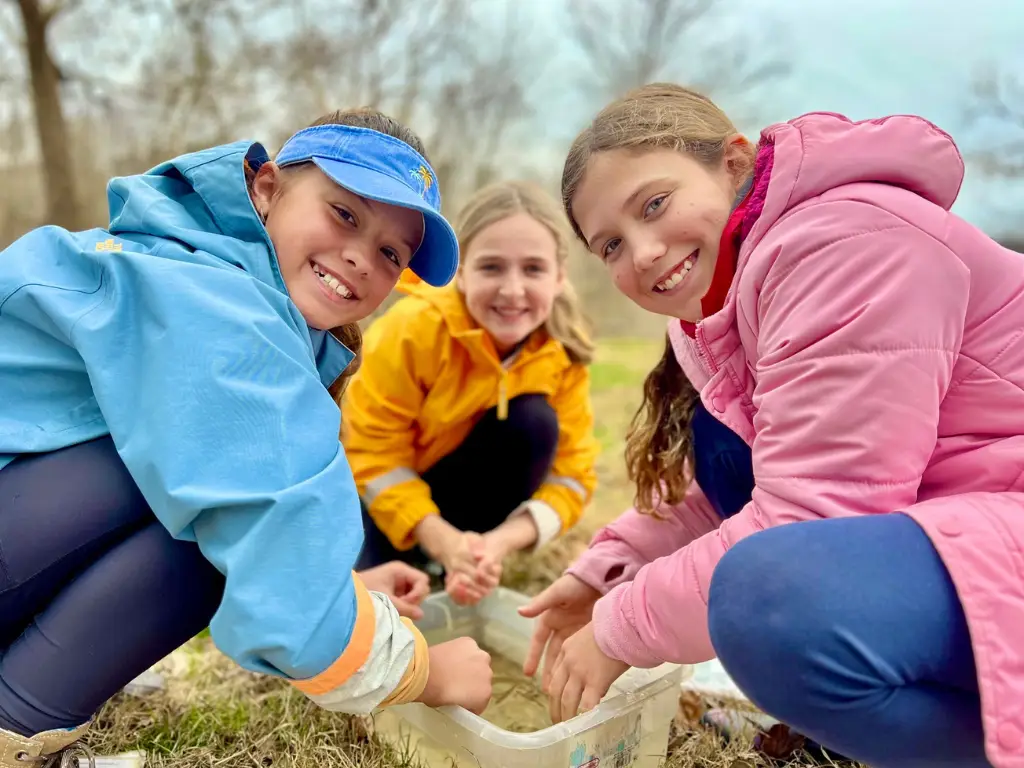
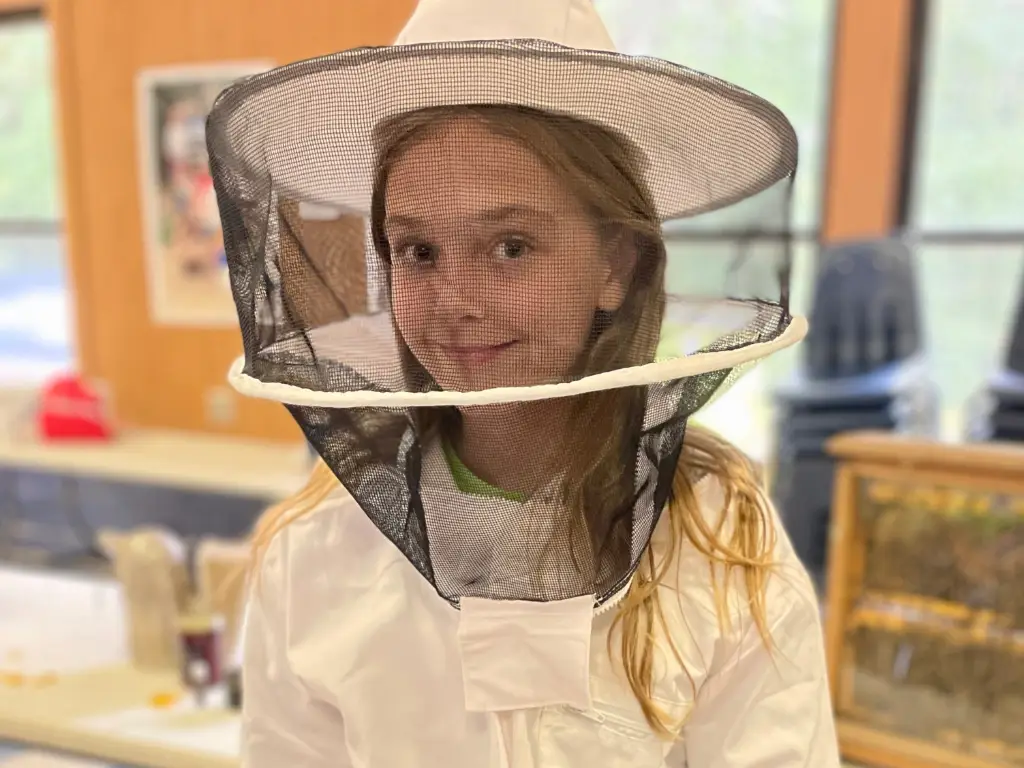
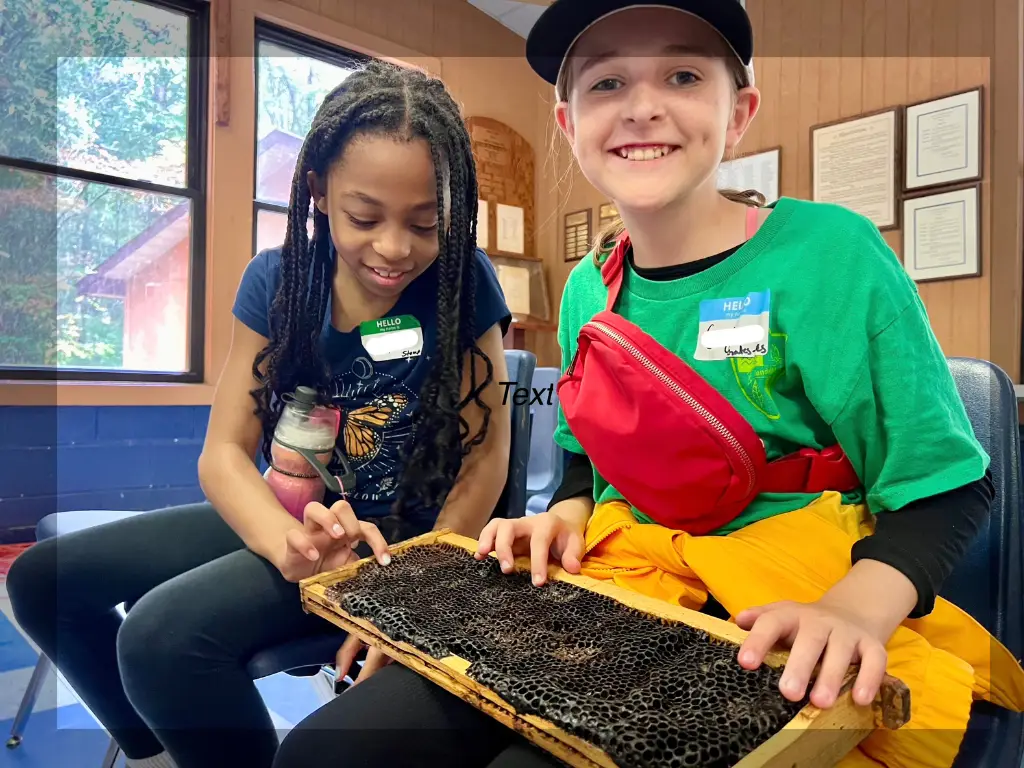
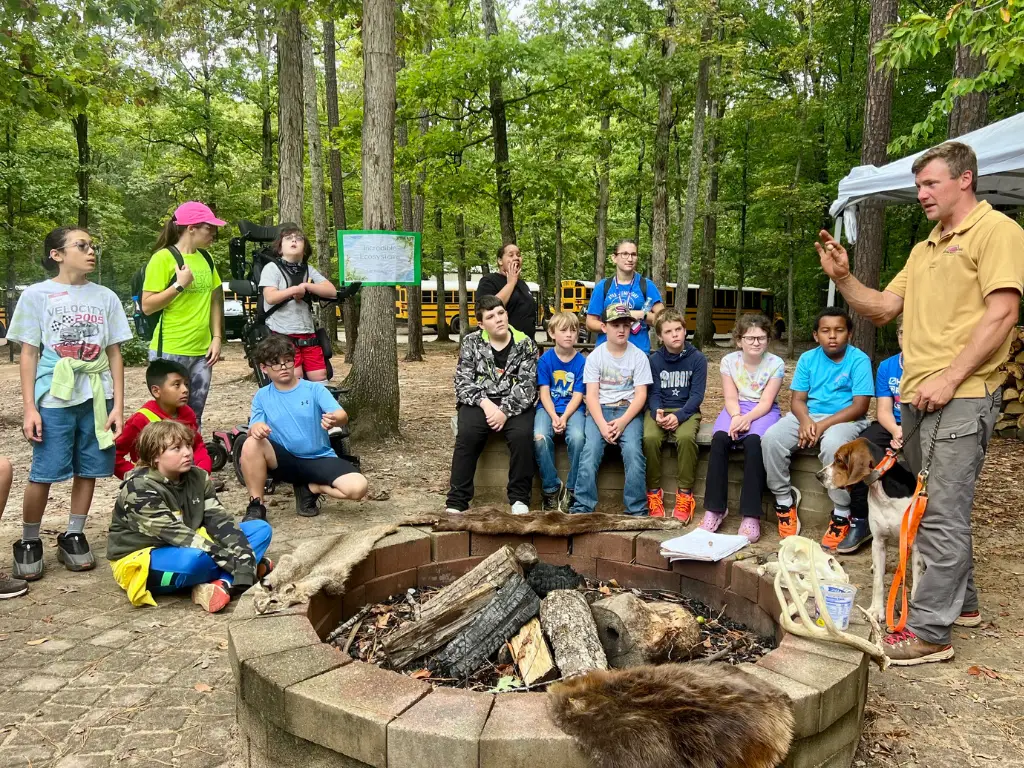
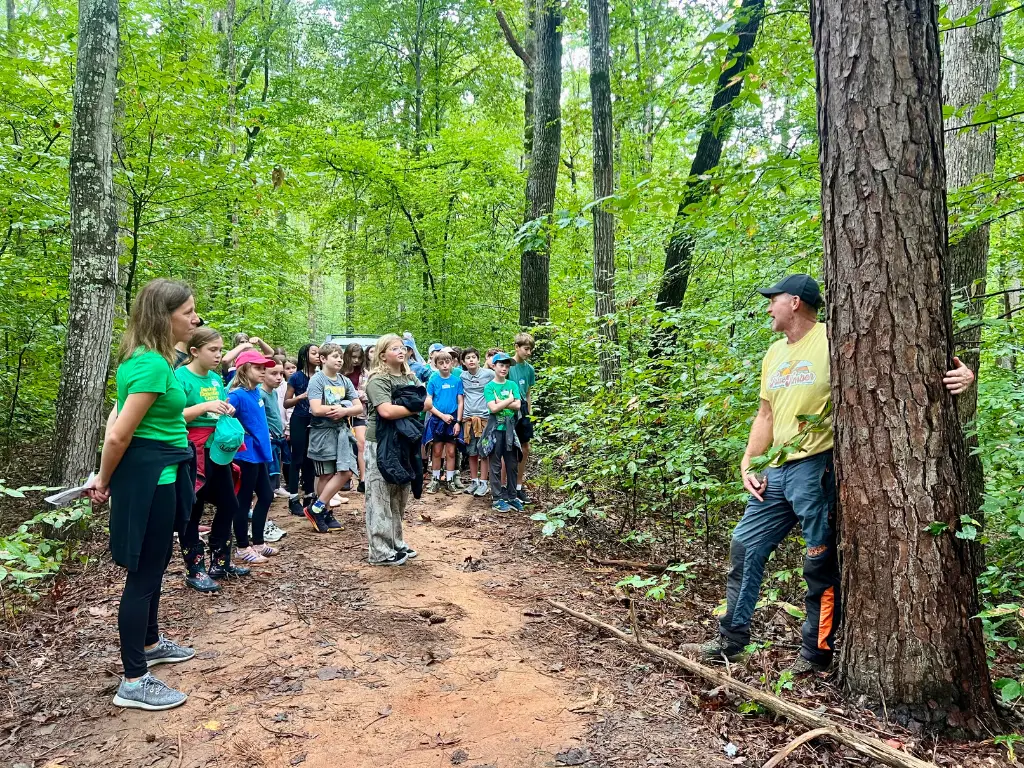
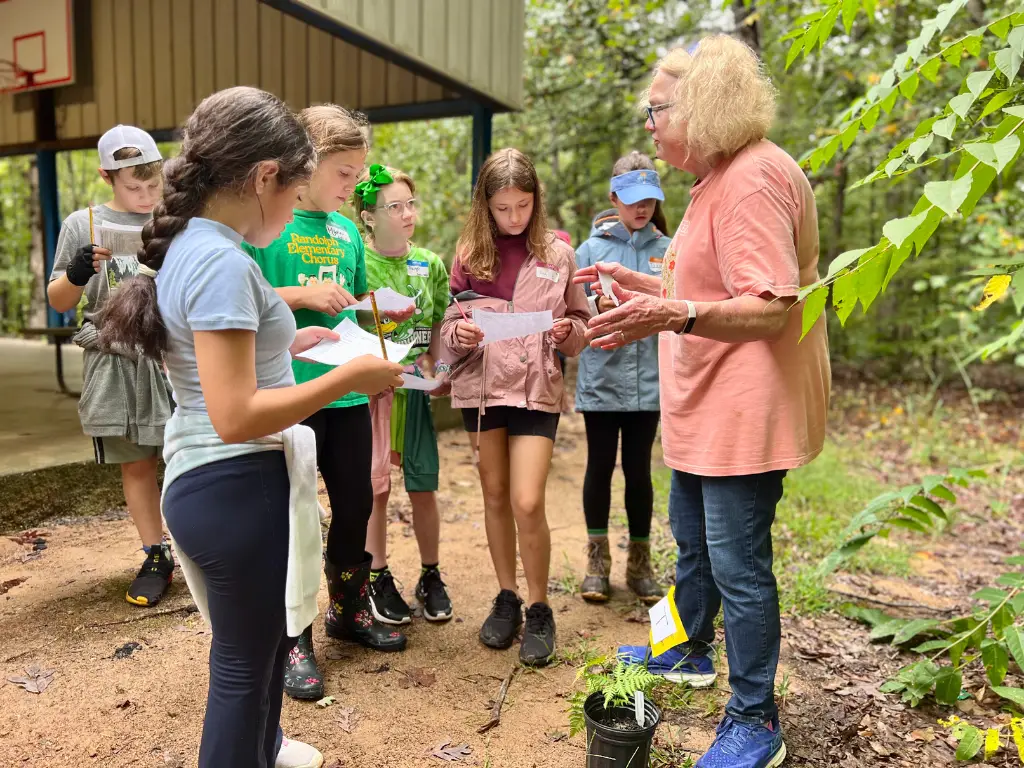
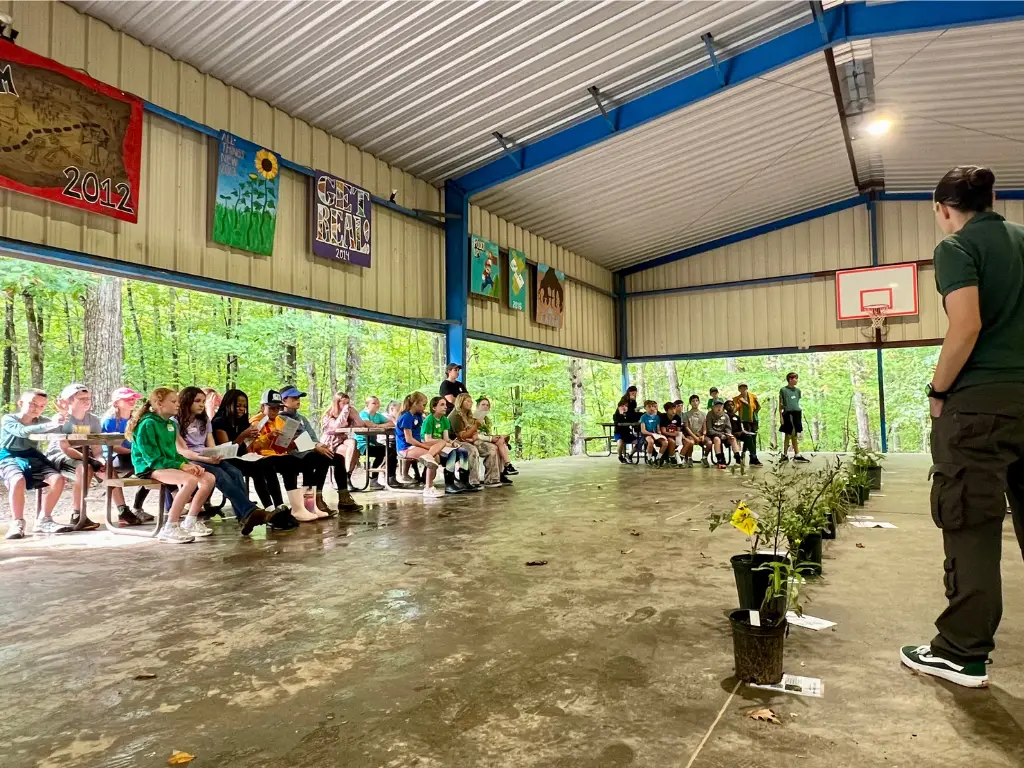
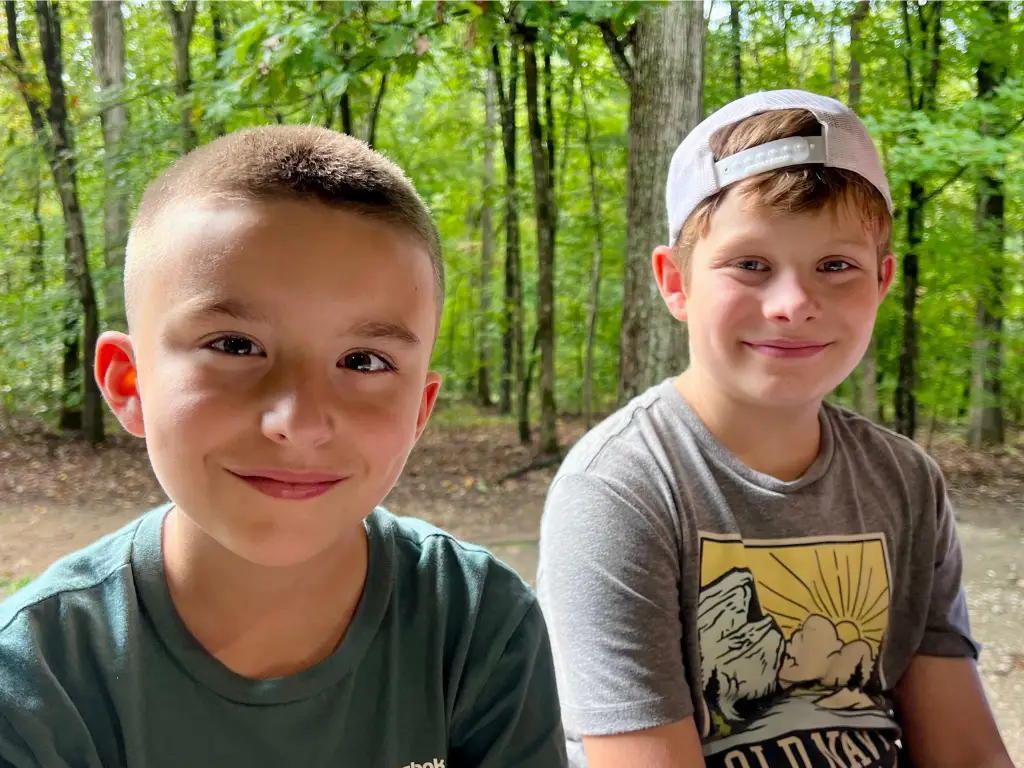
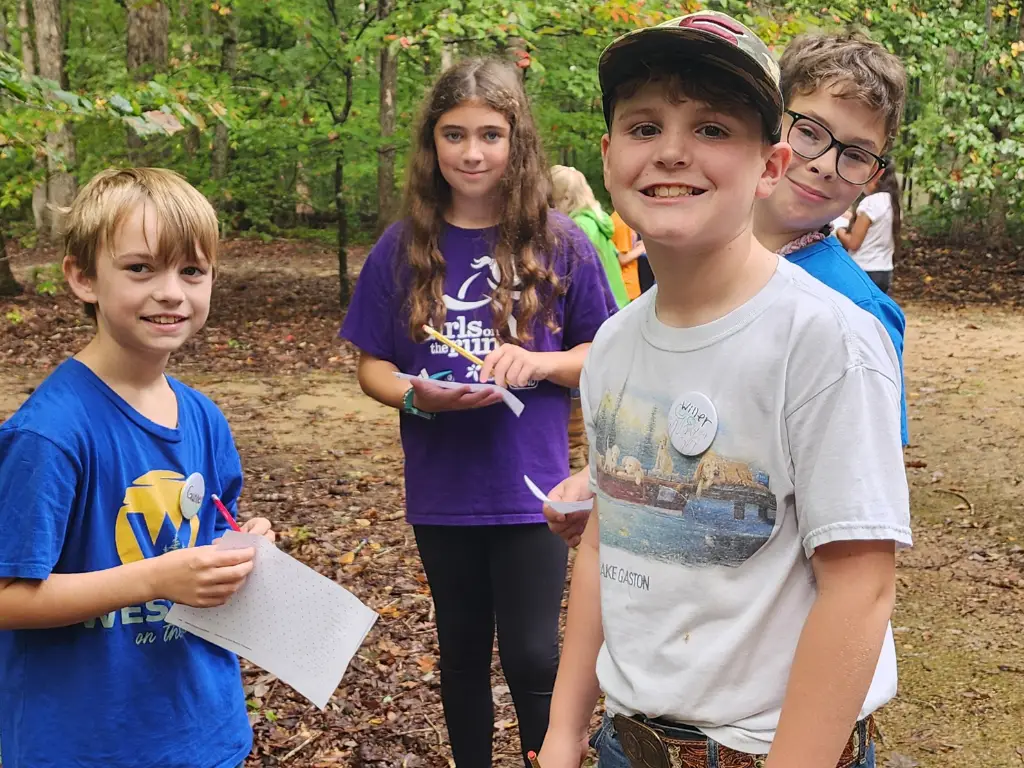
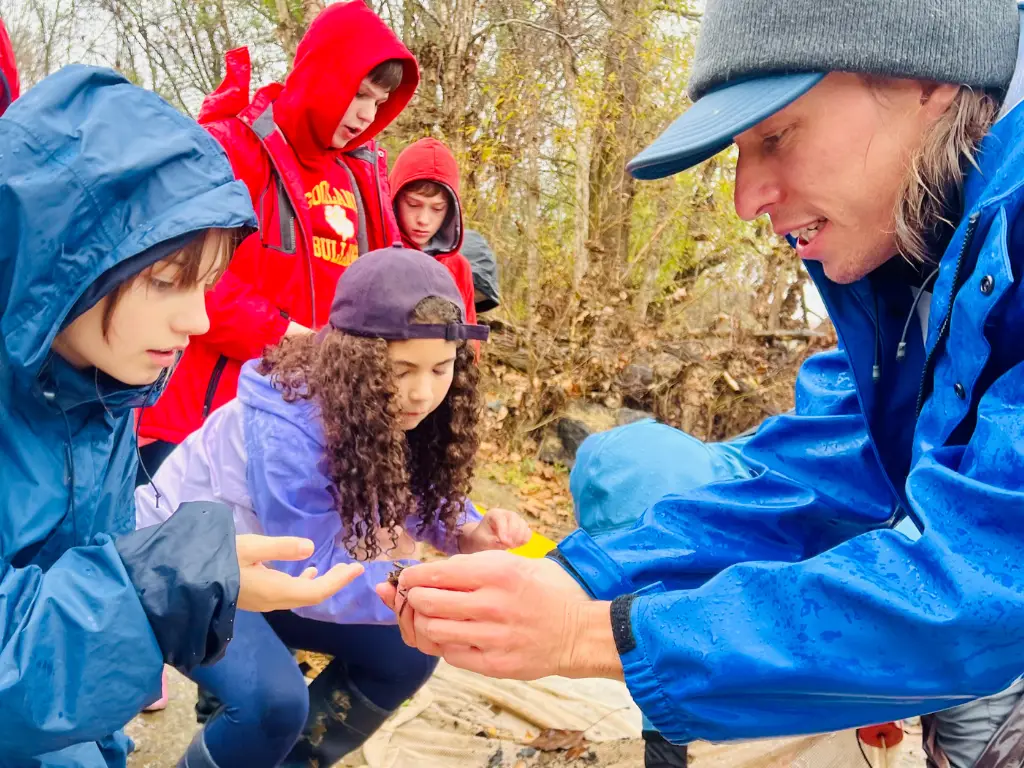
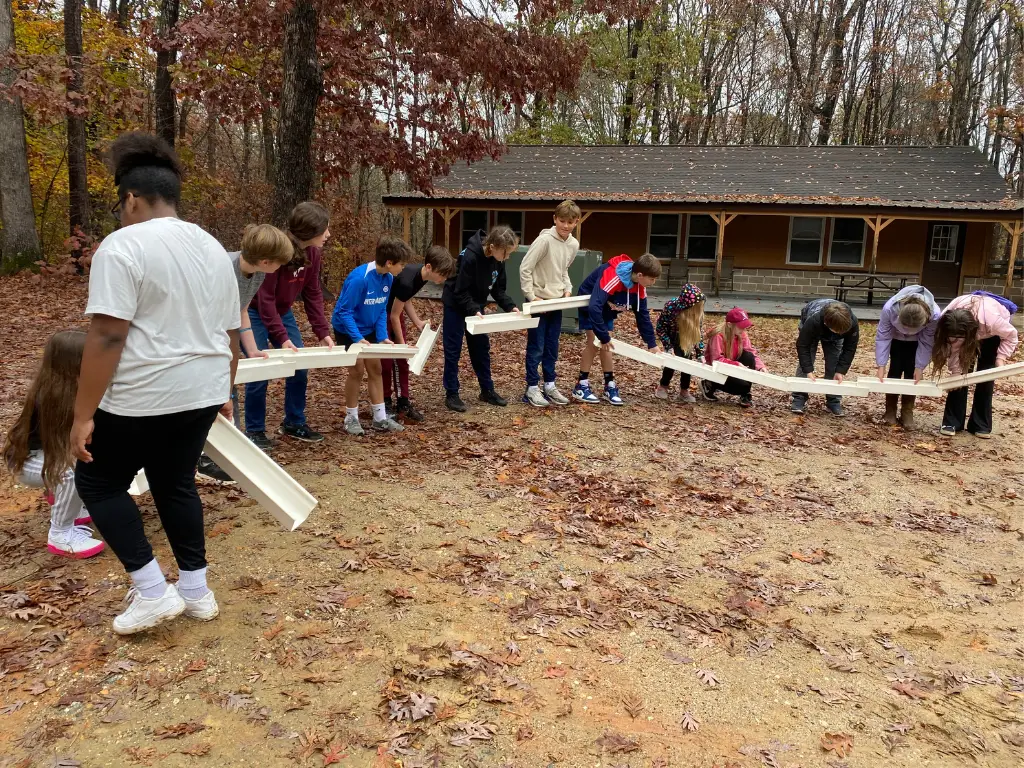
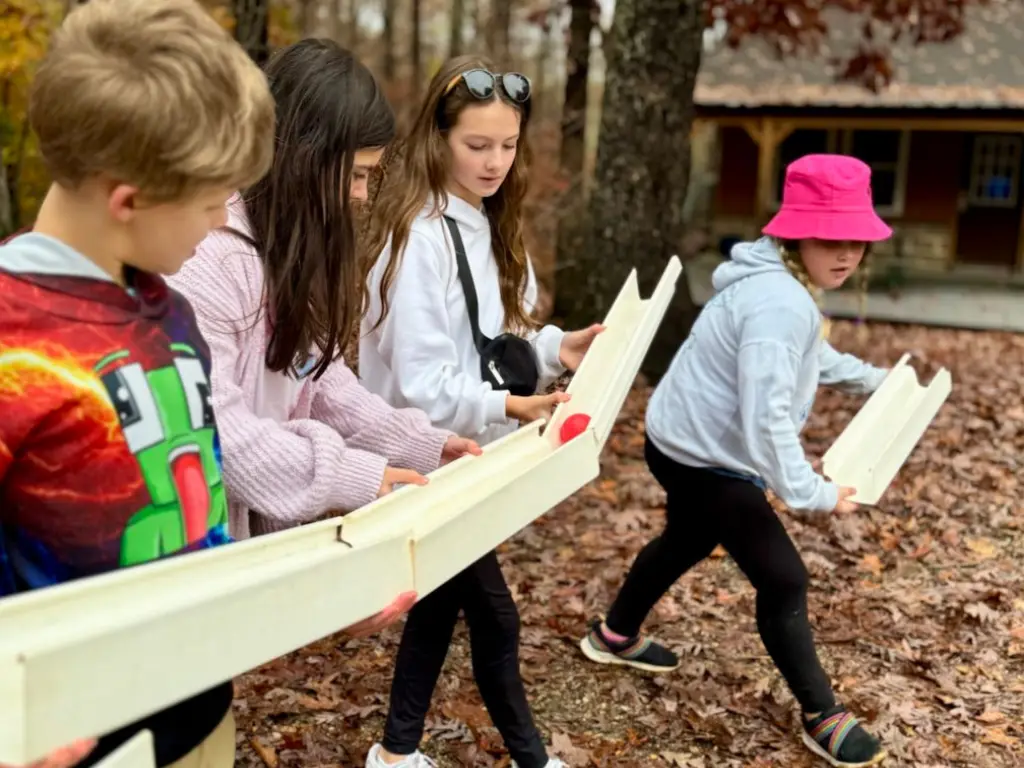
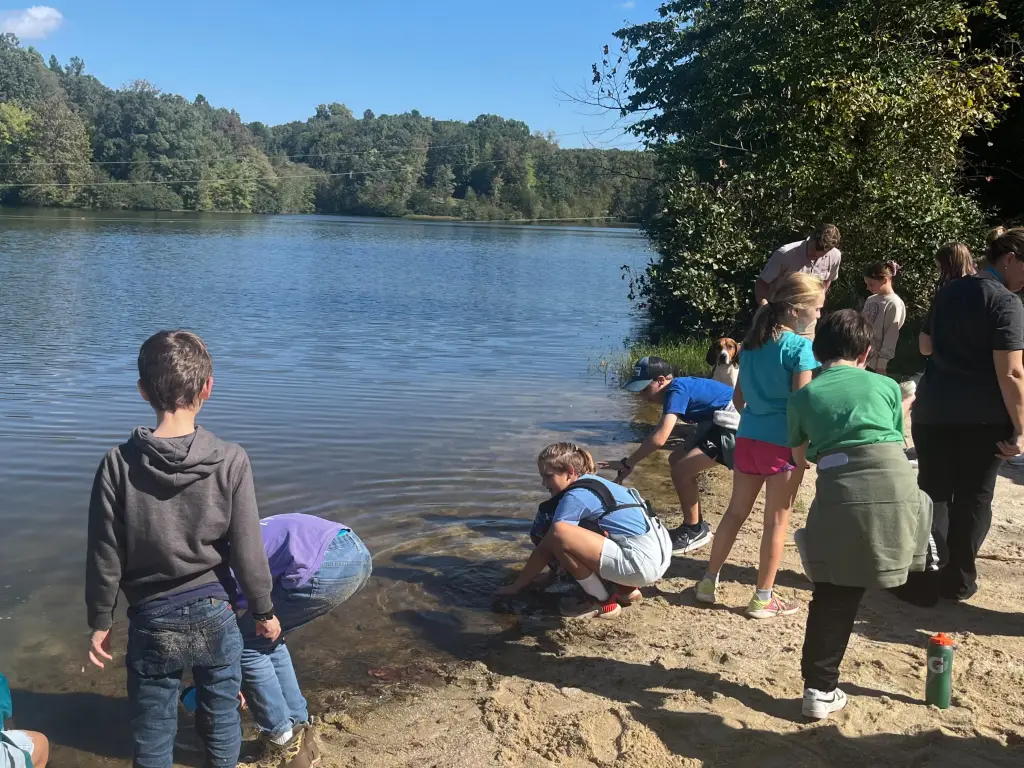
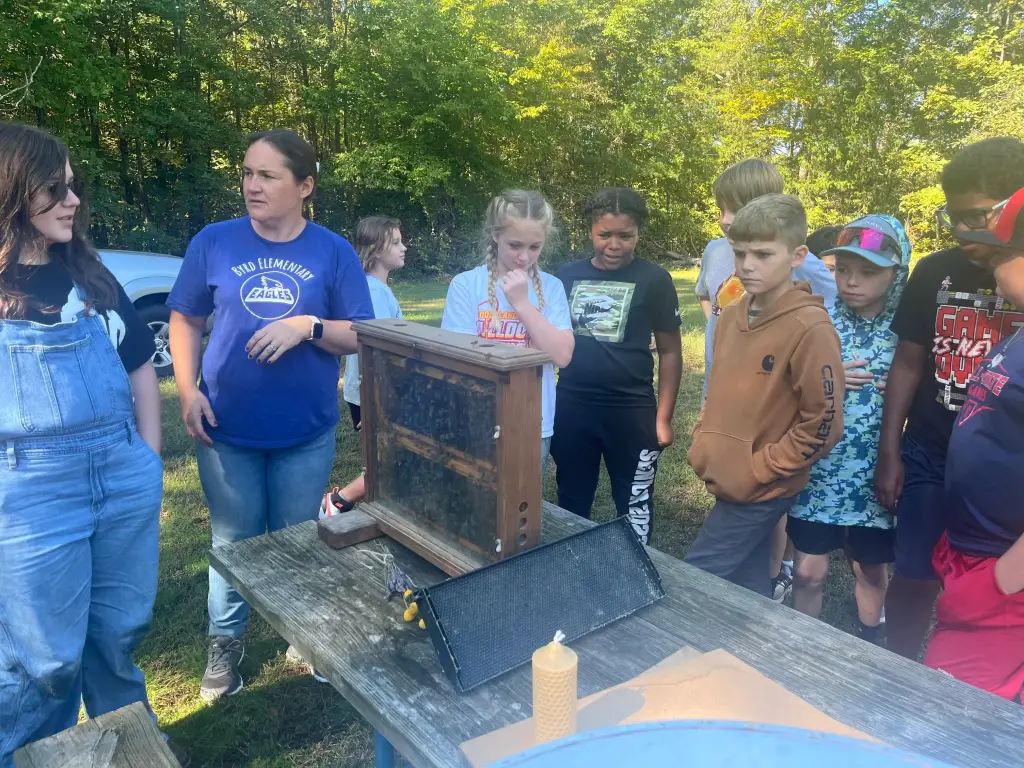
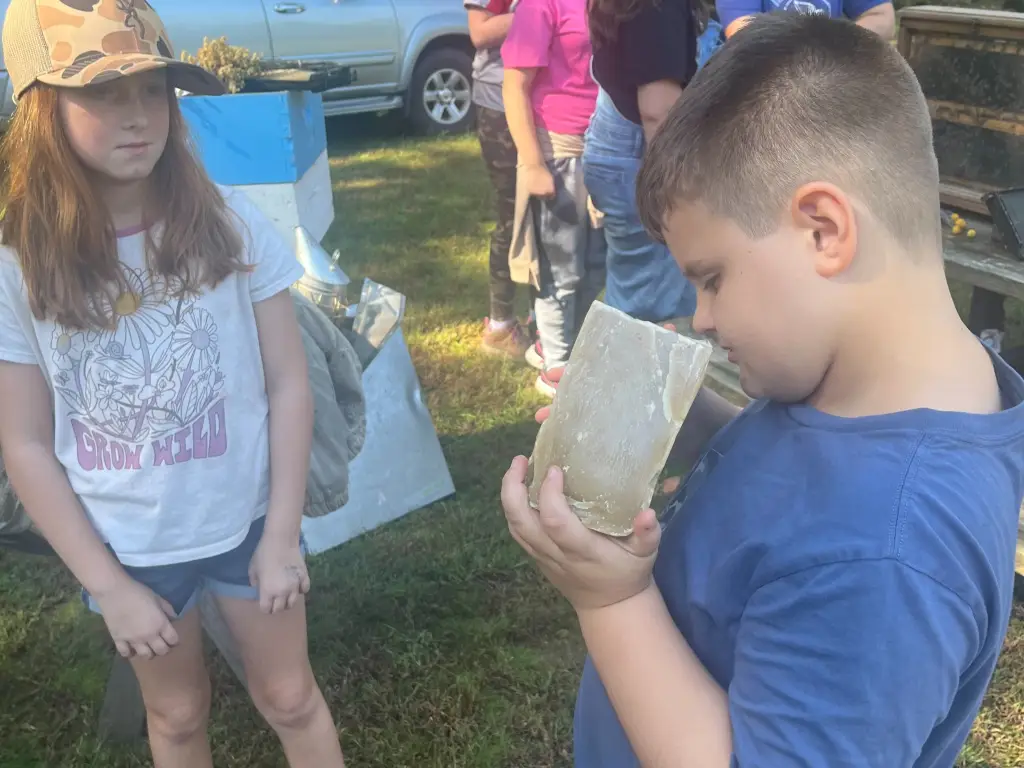
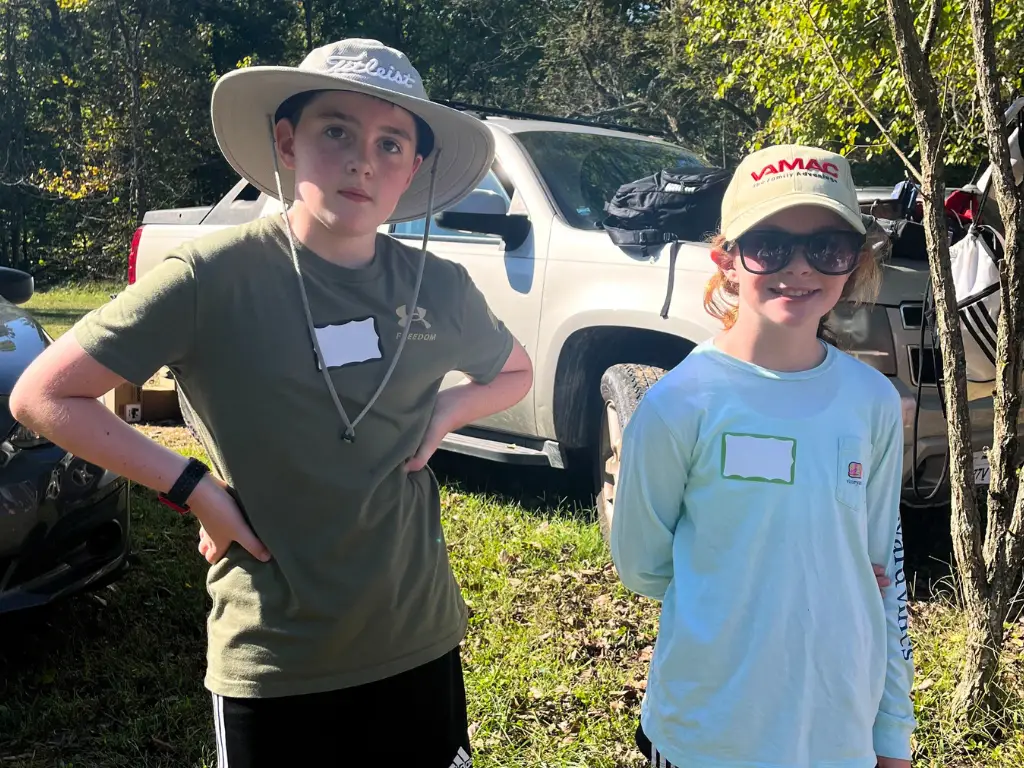
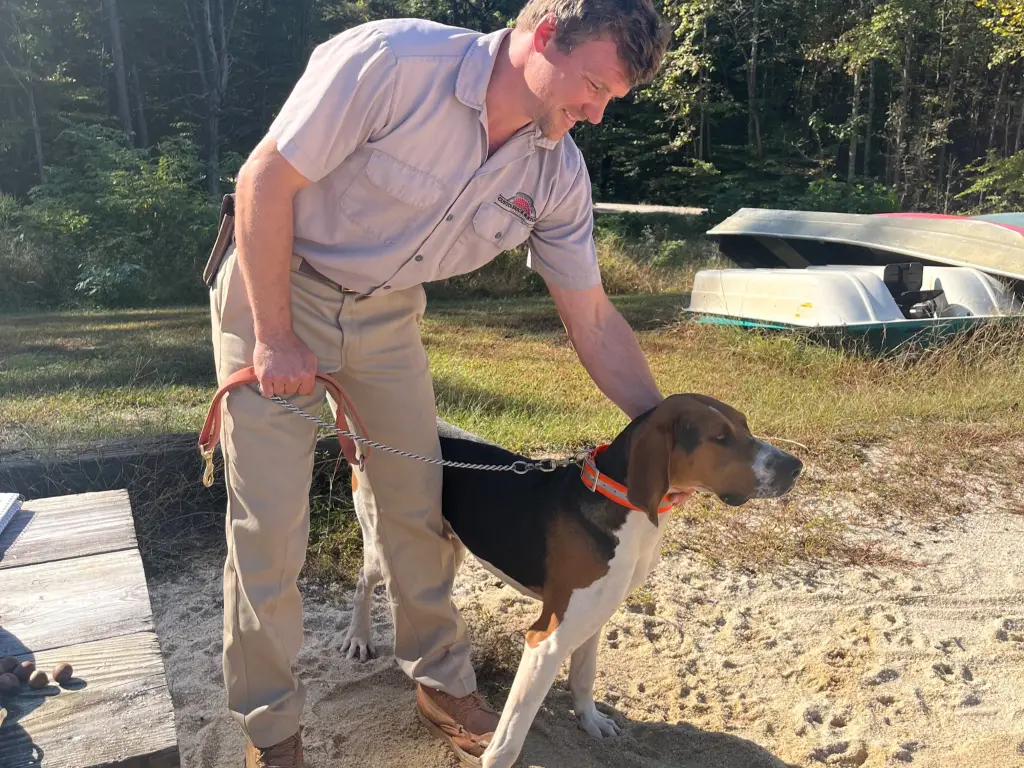
The STEM in Nature program provides students with immersive outdoor learning experiences at Westview on the James through three seasonal visits each year. Students study aquatic and forest ecosystems while cultivating gardens, observing how environmental changes affect the same location across different seasons. Middle and high school students enhance their understanding through canoeing expeditions on the James River, where they explore watershed systems and environmental sciences both on water and land in partnership with the James River Association.
Through these hands-on investigations, students discover how living organisms meet basic life needs, possess functional adaptations, and can be classified by specific characteristics. They observe and measure environmental changes over time while investigating how plants influence air and water quality. Conservation activities include planting grasses along riverbanks to prevent erosion and water pollution, as well as establishing trees to improve air quality.
Students explore how organisms, including humans, interact within ecosystems and adapt to satisfy life needs while responding to environmental challenges. They examine how location, climate, and physical surroundings shape community life, including food systems, clothing, shelter, transportation, and recreation. The program incorporates rich historical context by studying how the James River served as a vital source of nourishment and transportation for both Powhatan Indians and English settlers.
These outdoor experiences seamlessly integrate with classroom academic lessons, creating meaningful connections between environmental science concepts and real-world applications.
Special thanks to Dominion Energy and Richard S. Reynolds Foundation for helping the GEF make this happen.